Thursday, June 12, 2014

What's Happening To TV? Personalized Internet TV Channels The New Star

There’s a new star in town… the Internet. All right, it’s not new but TV Networks on the Internet are a fairly new concept that takes some warming up for some, not only to get used to but also to comprehend. See our TV network for an example, PCIN.TV and Live Fit Magazine on YouTube.

Today, while more people are beginning to understand how the Internet is the new medium for TV, there are still some trying to comprehend a powerful change that is creating new jobs and industries. Often the conversation goes like this, “Really, I’m going to watch a TV show on my compute?,” they say. “Yes,” I say.

And then I add, “Or you might watch it on your flat screen, Internet-ready TV through services like Direct TV or on your iPad or iPhone. Or you might even watch a live broadcast streamed via the Internet and TV Networks on the Web using multiple devices and from anywhere you like.” The point here is the TV world is changing and insiders are scrambling to keep up.

The pros and cons of Internet TV
At one time TV production was for the elite few who had the skill-set, technology, and lucky opportunity to be part of it. Today, nearly anyone can make a video or even a slide show (and call it a video), post it to YouTube and–bam!–it’s on TV. Well, kind of…it’s not being broadcast over the traditional airwaves but the digital world is putting many people on the map. And that’s equalizing the playing field for those who have a story to tell.

Today, multimedia journalists, like myself, can go anywhere in the world with a fairly small bag of gear, shoot a story, and get it to the Internet and also to traditional TV without needing a big, expensive camera or full crew. The story can be produced quickly, efficiently, and effectively.

However, that also means that, as the barrier to entry drops for an industry, the standards of that industry may drop as well. Today, you have people with cameras, who don’t know much about TV, journalism, or even videography, producing videos that make their way to the Internet. That’s not to say that an amateur can’t create a very viral video. It happens all the time. But what we’re talking about here is reliable high-quality TV programming but on the Internet instead of only on television.

Let’s explore the numbers. Since there is a saturation of video content why should anyone pursue this medium? Just think about these mind-blowing statistics from YouTube.
• 100 hours of video are uploaded every minute.
• Over 6 billion hours of video are watched each month.
• More than 1 billion unique users visit YouTube each month.
• According to Nielsen, YouTube reaches more adults ages 18-34 than any cable network.
• Almost 40 percent of YouTube's global watch time is viewed by people using mobile devices.


In 2009, 600,000 people gave up cable TV and opted for free Internet programming instead. While today some of those digital networks are finding ways to charge their viewers, many people feel better about paying for specific viewing of online programs instead of ongoing monthly cable TV.
“Skate to where the puck is going.” ~Wayne Gretzky. Go to where your viewers already are–the Internet.
You can hold off on building your Website with quality videos or you can be an early adopter and capture the growing audiences on the Web. The integration of TV and Internet TV will collide in a big way in the future. I believe viewers will switch seamlessly from one source to another just as they do today between what used to be “standard TV” and cable.

Social Tv apps will take on a greater presence in the future. These apps will work alongside and in conjunction with what you're viewing on TV, being able to offer synchronized programming to your smartphone and tablets.
"We have eliminated the walls between TVs and mobile devices to give brands a unified and fluid fan interaction, organically extending their presence everywhere the consumer is," USA Network's EVP Alexandra Shapiro said in a prepared statement.
Through social TV apps such as Beamly and TVTag help viewers connect and use various social platforms to express their views on content. Most people today watch TV and have some sort of other second-screen device that they are simultaneously using. Bringing TV and the Internet closer together is is what TV manufacturers are already focused on. It’s predicted that by 2025 everyone will own a smart TV, that’s able to view anything on the Web.

Netflix Chief Product Officer, Neil Hunt, in an article on adage.com, says that TV will be more personalized. Channels will be shaped around an individual, people will pay for what they want to watch streamed through their TV. Advertising will change. Just as Netflix can personalize and make suggestions for its subscribers, based on what they’re viewing, so too, can ads be offered to consumers using the same technology thereby making the ads fewer but much more relevant and targeted to specific consumers.

Having online video content will be one of the main sources of viewer consumption. Having an online video newsroom, podcast, or Google Hangout streaming through your website to your targeted audience will position you as a thought leader and influencer in your industry… just as traditional media is in the mainstream TV environment.

The power is in the storytelling. The influence comes from producing content that offers information, an opportunity to connect and provoke a desire to learn more.

Great online Video News Stories (VNS) consist of five critical components:
1. A compelling story that matters to the audience. Stories that affect more people have greater significance and are often considered more newsworthy by traditional media. The story is built around a Hero and the transformation that occurs. The Hero ero is not usually the company; rather it’s the person the company is helping.

2. Information that provides help, tips, and added value. The story educates, creates a reason to care, and raises awareness about a problem, concept, event, or person. What makes this story intriguing usually comes from the human interest component of it. These stories typically have an emotional appeal.

3. Sound bites or interviews that don't use "junk food jargon". The interviewee must be engaging, truthful, and speaking clearly without using a lot of industry lingo references that will leave the viewer feeling like an outsider. People who are great on camera usually come from a background in TV/film/public speaking or they've had professional media coaching to help them succinctly articulate their message in brief statements to a reporter.

4. The newsworthy angle. A two-minute VNS doesn't give time to include everything. When a reporter covers a story, there are many aspects left out and for good reason. Too many details would confuse the viewer. Find the newsworthy angle and use that to craft a story. If it has a connection to a real-time event, all the better. For instance, if you're a business in the agriculture industry, producing a story that touches on the issue of a major drought going on in your area and how your company is creatively saving water, can be an excellent tie-in that might also get your story exposure by traditional media. Or here’s another example.

This story showcased an issue that homeowners were having and highlighted how a remodeling company was able to solve their problem.

5. The call to action. Special offers, discounts, where to go for more knowledge, support, or social interaction. It’s a great idea to offer free seminars or Webinars to provide more expert advice. Here’s a video example of how to get the word out to potential guests.

When these Video News Stories are placed on Websites that are surrounded by other engaging information that adds value, visitors stay on your site longer and are many times more likely to pursue your company or product simply because they have the knowledge that they couldn’t gain elsewhere such as in a brief

30-second ad that they see on TV.
This knowledge (via the video and/or written blog post) can be shared easily via the click of a mouse. It’s spreadable and archivable, which makes the content highly useful for consumers. They can bookmark it and return again and again to digest your message.

Rising Food Waste And Water Shortage

One third of food produced for human consumption is lost or wasted globally.” (FAO, the UN Food and Agriculture Organisation). That is the equivalent of more than 1,000 cubic kilometres of freshwater abstracted per year, i.e. close to 25% of total estimated global withdrawals for human use in 2005. (2030 Water Resources Group, Charting our water future, page 6) This is particularly important because water, and the rapidly growing gap between withdrawals and sustainable supply, will be by far the most critical factor for global food supply security for the next 10-20 years.

About one-third of today’s food losses occur in advanced economies and two-thirds in developing countries (with lower per-capita waste but a much higher share in global population).

What are the causes?

In developed economies, waste is very much the result of prosperity. One-third of the overall 280-300 kg per capita of all food wasted and lost is actually thrown out by consumers, with a negative underlying trend: in the United States per capita food waste has increased approximately 50% since 1974 (this figure comes from a somewhat unusual source, namely the US Government’s Institute of Diabetes and Digestive and Kidney Diseases).

According to the US Environmental Protection Agency, discarded food represents the single largest component of total municipal solid waste. Waste is also accentuated by at times exaggerated “aesthetic” food standards set by governments and retailers (source FAO). “EU rules on misshapen fruit and veg were relaxed in 2009 but supermarkets still maintain private product standards.” (Source)

In emerging and developing economies, food loss is the outcome of poverty, particularly a lack of infrastructure and associated technical and managerial skills in food production and post-harvest processing. In these countries, 95% of the 95-115 kg of food wasted per capita are lost and wasted before reaching consumers.

Again, in many instances, trends seem to be negative too. There is no record of progress made towards the post-harvest loss reduction target set by the UN General Assembly in 1975. This report by the organisation Business for Social Responsibility found that “in many poorer countries, storage infrastructure, such as grain silos, is worse than it was 30 years ago, the net result of reduced government investment in agriculture.”
(Source) Rapid urbanisation leads to extended supply chains, which requires more rather than less investment in infrastructure. And without trying to be complete: with more prosperity in emerging economies comes a “shift towards vulnerable, shorter shelf-life items” (J. Parfitt et al., ‘Food waste within food supply chains: quantification and potential for change to 2050’, Royal Society August 2010).

Whenever strategies are designed to bring freshwater withdrawals back into line with sustainable supply, policies and initiatives to reverse negative trends and enable a significant reduction in loss and waste of food must be included.

What can be done?

Let us start in advanced economies. Farmers, traders, manufacturers, wholesalers and retailers should carefully look at their supply chain and processes. A good example of this is Food Waste Reduction Alliance (FWRA), with its three major goals: (a) reduce waste wherever possible, (b) increase donations of safe and nutritious food getting close to the “best before” date, and (c) increase recycling of the remaining parts where the first two goals do not succeed.

The very high waste of products bought by consumers and then thrown away is also a question of personal responsibility. In Europe and North America, 95-115 kg per year of food per capita ends in waste baskets at home, compared to only 6-11 kg per capita per year in sub-Saharan Africa and South/Southeast Asia. Industry and retail can help reduce this type of waste, for instance with smaller portions or pack sizes.


In developing countries, we must urgently improve the infrastructure. This will be a key item on the agenda of the G20 meeting of heads of state and government in Australia this year. As a consequence, the business-driven B20 – the aim of which is to contribute ideas for the gathering of the government leaders – selected investment in infrastructure as the priority for one of the five taskforces.

For this group, at Nestlé we estimated an investment of USD 2.5-3 trillion in emerging/developing economies will be needed over the period 2005-2050, for cold and dry post-harvest storage, rural roads, wholesale market facilities and first-stage processing (estimate based on FAO data). This is high, but seems affordable.
Again, there is also a role for industry. First by reducing any remaining waste in operations, but also by contributing to the modernisation of the food supply chain, in view of the increasing number of people living in cities with a population of more than 1 million and the ever-longer distances between farm and consumers’ dinner tables.

Let me illustrate the potential impact of more industry involvement with a product I know particularly well, namely milk. Studies by the FAO show an 18% loss in traditional fresh milk supply chains to urban centres in developing countries, due to spillage and spoilage. Depending on the season, these losses can be up to 50% due to forced consumption, because dairy farmers are unable to reach their urban buyers.

In comparison: losses in our Nestlé supply chain from milk farmers to retail outlet are below 0.6%, for instance in the climatic conditions of Pakistan and over very long distances. There, the milk-shed where we collect milk from smallholder farmers extends over an area with a total surface twice the size of Switzerland.


Traditional transportation of milk
 And then there is packaging (rather unpopular in parts of Western societies): "Food wastage in less-developed regions … with good packaging it is rarely more than 2-3%.” (Source)

Please comment
I am sure there are many more solutions and more issues that need to be addressed in order to reverse the trend towards increasing food loss and waste. I am looking forward to your comments and ideas.

From MADMEN© to Company Men – Building an In-House Creative Agency While Still Employing Outside Agency Services.

By Victor Adams.

When asking about in-house creative service support you may get different opinions depending on which side of the boardroom your speaking to, so sit down and pour yourself a drink.

“Help yourself... not the Stoli.” – Roger Sterling

Those in favor find a great collaboration and increase support that result in a faster road to campaign approvals by Clients.

Those opposed find less value in “duplicating efforts” already performed by outside agencies and contractors who are employed by the Client. My experience as an architect and manager of in-house creative departments is that there’s no one approach that fits every model, however in-house support can be achieved in any scenario and lead to a faster response, a more efficient process and a level of creative product that fulfills the objectives set forth by all those involved.

From my 20 plus years of experience, from working on the agency side to building in-house creative teams from scratch. This is my pitch when asked for advice on how to proceed.

It’s not the ways of Don Draper anymore?

Although it’s important to be confident in your knowledge and ability to drive business forward and command attention, it cannot be my way or the highway. There are many Drapers in this world and half of them fall outside of the labeled “creative team”. Although, I insist that they are every bit as creative.

As a in-house creative employee of a larger corporation, on a regular basis I find myself managing expectations of our internal management team (or Client) and outside service providers (or Agency), all while developing creative content through my own in-house department and delivering a consistently branded product on schedule and on budget. But “let’s take it a little slower. I don’t want to wake up pregnant” – Don Draper

Building an In-House Creative team takes time, patience and full support from your senior management. Even if you’ve been through this exercise before in another organization you can’t rely on previous models to effectively build a team that meets the criteria of your new employer.

Here’s how I’ve approached the build and insertion of an in-house team:
1) Spend time up front assessing the current conditions of the Client/Agency relationship.
  • Listen to each team member and look for the common ground.
  • In most cases we’re dealing with experienced marketers and can always learn from their history.
2) Respect the culture of the Client and Agency.
  • It helps to have a thorough understanding of how each work together and independently. I’ve started my career with agencies large and small and find to this day the structure has not changed much from the days of pitch to paper development.
  • Clients are accustomed to getting what they need when they need it. If an agency cannot step up to accommodate the client will find another way.
  • Agencies are, in many cases strategically staffed to keep their shop busy. Workflow can, at times be scheduled to the quarter hour to maximize productivity. Agency teams can be larger and there are often more steps in between each round of development to insure the work meets the criteria and quality of both Agency and Client before it goes out the door.
“And let’s also say that change is neither good or bad, it simply is. It can be greeted with terror or joy. A tantrum that says ‘I want it the way it was,’ or a dance that says ‘Look, something new.”– Don Draper

3) Here’s where the in-house creative team can benefit both parties.
  • As an in-house service provider my approach is that which is of the best interest to the development process overall. I put my ego aside and become part of both teams.
  • I’ll guide the Client from the initial stages of the brief, schedules and budgets through first pitch, revises, review and final delivery. I become their voice for the agency. Listen to their goals and expectations of the project from the start and through each stage [goals may shift during development].
  • I will partner with the Agency to set the course for success based on what we agree upon with the Client. My job is to become an extension of the Agency’s team, but allow them to be creative without overly dictating direction. Most important I will give them enough support and flexibility to come back to me and the Client with their solutions, knowing that I’m in their corner during each round.
4) I must be flexible, patient and honest. There’s always a subjective POV to how work gets done, or the outcome. It’s important to remember that everyone wants this to succeed. Again there’s usually more than one solution.
  • It may not be ideal for either party involved in the process, but if the understanding and support from Senior Management is there from the start than it should be understood that this has to work together.
  • There will be power plays on both sides. It may get tense at times even heated. Always keep a steady head, be patient and understanding of the changes being asked on both sides and above all else be of service to both during the transition.
“The truth is people may see things differently, but they don’t really want to.” – Don Draper

5) Give credit where credit is due.
  • It’s important to include key stakeholders in the development process and acknowledge when it’s their time to step up and be recognized in the room.
  • Boardroom meetings can at time be smaller and restricted to key management. Here it’s critical that the team comes away from the room feeling as if both Client and Agency have recognized those who made the work possible. This is less about a pat on the back and more about truly respecting the amount of time and effort (and quite frankly man power) that went into development. Not just on the Agency side but also on the Client side. Often there are other divisions that require Client consultation and wrangling to push work forward for the Agency.
“Who knows why people in history did good things? For all we know Jesus was trying to get the loaves and fishes account.” – Roger Sterling

6) Division of work.
  • Here’s the tricky part in all of this, as Agencies do not want to lose work to an in-house team. However the sooner they accept the original request from a Clients senior management to provide in-house support the quicker we all get on to being productive together, being considerate of each other’s objectives and allowing for a profitable and successful coexistence in the workplace.
  • Clients will continue to push for work quickly regardless of volume. Agencies will maximize their workforce to avoid “down time”.
  • In-house creative support should work first to fulfill the Clients creative strategy overall, act as a knowledgeable source for creative process, technology, timing and budgets and shepherd a collaborative process between the Agency and Client side.
  • When projects fall outside the Agency scope of work, or are not included in the fiscal year budget planning, or is simply needed faster that an Agency can provide, then the in-house creative team will further prove it’s worth and deliver as needed with less time and money spent. This should not be perceived as a lack of ability on the part of the Agency, only part of the process of working together to keep the Agency on track with scheduled projects while providing creative components to the Client on an ad-hoc basis or if choosing an in-house solution proves to be better for the Client at this time.
“We have no other clients! If Lee Garner, Jr. wants three wise men flown in from Jerusalem, he gets it” – Roger Sterling.

7) You now have an in-house creative department and outside Agency – Two trains barreling down the same track, heading towards the same station, due in at the same time.
  • So now we’ve divided the workflow, the assets and the schedules. We still have the same objectives and are working towards the same goal.
  • As in-house support it’s always our primary responsibility to inform and be informed by all parties at all stages of development. I will look for opportunities to “check in” on Agency progress and share our in-house progress as well.
  • If possible we are presenting all stages on Agency and in-house team development together with the Client. If time does not allow then it is critical to share with the Client the Agency team’s stages of development (not a reveal but a set-up) allowing for the Client to see the “bigger picture” and how all components will ultimately work together. Remember your role is to inform while championing successful buy-off for all involved in development.
If you succeed in building your in-house team and managing your Client/Agency relationships that everyone should be left with a feeling of collaboration and pride in their work. There is no taking sides, the only winner here is the successful development of your product on strategy, on time and on budget.

So if you’re having this conversation in your own company or with your Client then the seed has already been planted by your Client who’s site is set on in-house solutions. There is great benefit in achieving this level of support, efficiencies in communication, workflow, budgets, schedules and service, however for both sides the first step is accepting the change.

Once again every Client/Agency scenario is different so to begin immediately with discussions on staffing or workflow would be premature and would most likely be addressed only in broad strokes. Therefore I direct you back to the opening of this article and invite further discussions publically or privately as they present themselves.

“Remember you need three ingredients for this cocktail, A Client, An Agency and An In-House Creative Team. Stir gently, not shaken, served chilled and straight up”.- Victor Adams

This article is my opinion based on my successful experiences building and managing in-house teams.
My name is Victor Adams and I have been a creative service provider for over 20 years. As part of many creative teams for ad agencies including JWT, DDB Needham and Campbell-Ewald as well as leading creative marketing strategies for entertainment studios such as The Walt Disney Company, Twentieth Century Fox, Paramount, MSG Entertainment and HBO.

MADMEN and it’s logo is a Copyright © 2010-2014 AMC Network Entertainment LLC. All rights reserved.

10 Things To Do When They Don't Call Back

I pitched a TV show and they loved it. I was going to mike up tables in a restaurant and tape record dates. I would know the woman (she was beautiful, funny, etc) and the guy would not now he was being videotaped.

We created a reel (two dates). One guy admitted in the middle of the date he was confused about whether or not he was gay. Another guy got a call from his wife in the middle of the date. Great stuff. “Great TV” as they say in “the Biz”.

I pitched it to Dave Bartolis who worked at HBO Independent Productions. They loved it. He was going to call me back the next day. He didn’t. Or the day after that. I would call his office. His secretary would say he was on the other line. I can hold. Oh, he’ll call you right back.

He didn’t.

Finally I called his home number. “Oh, uh, we LOVE the idea. I’ll call you tomorrow.”

He didn’t. Or the next day Repeat the whole process above.

Another time someone wanted to buy a company I had started. They came around, they LOVED the company. It would fit right in with their company. Their company was named “Google”. I won’t get into it. They didn’t call back. Same as above. I didn’t call anyone at home this time. I had gotten better. But I had wet dreams at night. And then I would cry as the sun rose.

Why wouldn’t they call me back?

And then a girl. We were apart for a vacation. She was going out to dinner with her ex. She’ll call me AS SOON AS she gets back. I fall asleep. At 3am I wake up and realized I never got a call. So I call. No answer. Why didn’t she call me back? Where is she? Two months later she was pregnant. Who was the father?

Sometimes I hate the phone, emails, Facebook, Twitter, the call back. Why am I sitting here. Waiting. Don’t they realize I’m waiting? Don’t they want to talk to me: give me money, love, sex, fortune, fame, even just a little respect or generosity? You would give me those things. Won’t you?

A) Expand your alternative ideas.
When you are waiting for ONE person on ONE idea, you’re screwed. You are in a perpetual state of “I need this or I die”. So… we need to prevent you from dying. Here’s the surgery you must perform. Find at least one more idea you are excited about. There was one time I was raising a fund. People weren’t calling back. I decided, ok, time to focus on creating a business of skin care products. Eventually, I raised the fund.

B) Expand your list of people to call. Why did I just call HBO Independent Productions? Why didn’t I call Showtime? Or Comedy Central. I knew all the people. EVERYONE would’ve said. “I LOVE THIS” at the same time. This is the key to getting people to call you back. Even if nobody individually plans on calling you back, if everyone is saying, “I LOVE THIS”, someone will call you back.

C) Just DO it. I had two dates in the can. They were perfect. We did a third date. The guy wouldn’t sign the release form unless the girl, my friend, would have sex with him. Another perfect date in the can. Why did I need HBO to pick me? PICK YOURSELF! I could’ve just done fifteen of those dates and I would’ve had a perfect documentary. Or a complete pilot that I did myself without the help of any studio. I no longer pitch books to publishers who might sit on them for months. I PICK MYSELF. I no longer wait for buyers to come knocking on my doors for companies. I make the calls and SELL my company. And I DUMPED any girl who I was suspicious of.

D) Repeat: “infinite patience brings immediate results." This is a saying from something. Claudia told me. So I don’t want to plagiarize. Even though I am right now. But, truly, deep inside, I don’t, because I wish it were my original quote.

I cannot even begin to tell you how amazing this quote is. Every time I think I need ONE thing to happen to make me happy, I repeat the above quote and follow some of the ideas below to take my mind off of the ONE thing and it’s amazing the result. Something else happens and it’s usually better.

Einstein discovered that time is relative. My guess is, he was waiting for a girl to call him back when he made this discovery. Because everyone does run on a different schedule. One guy might say, “I’ll call you back tomorrow or so” and that might mean two weeks for him and it might mean fifteen minutes for you. And time expands exponentially the more ideas, the more choices, and the more you are capable of PICKING YOURSELF and doing also the below items. Infinite patience then does, surprisingly, produces IMMEDIATE results. I can’t describe further. You have to try it. It’s magic.

E) Work out or have sex. When you have a great meeting or phone call or date and you are now waiting for a follow up, it’s really similar to your body being mugged. When you are mugged the adrenalin inside of you spikes up to unheard of levels. It’s the “Fight or Flight” syndrome. You MUST fight or your MUST flee.

Instead... you are sitting, immobile, by the phone. But the adrenalin is still there, building up, unsure why you are not fighting or fleeing. Then you die. That would suck pretty bad just because somebody didn’t call you back.

So you have to get your body moving. Working out, sweating, sex – release all the adrenalin, get the endorphins or domamine or whatever the latest hormone they are calling it, running through your body to fight the adrenalin.

F) Clean. Yeah, take a shower. You stink. You’ve been sitting by that phone for days. Scrub with one of those hard brushes that take the dead cells off your skin and really open up your pores. Then turn the shower on super hot so you start to sweat it all out. All the pain, all of the “Why didn’t she call back” that has buried itself into the molecules in your arms, legs, face, head.

And then clean your house. It looks like shit in here. This is a reflection of what your brain looks like. Clean it all up.

Then throw stuff out. Why are you even keeping all these extra books around that you read ten years ago. Are you ever going to read “The Hobbit” ever again for the rest of your life? And yet, every time you’ve moved since high school, you’ve carried that book with you. But it’s a special edition with drawings! Throw it out!

Then clean your expenses. Do you really need to buy that extra book, t-shirt, movie, taxicab, hot dog, glass of wine? Clean everything. There’s a saying that all the cells in your body change every seven years. This may or may not be true. I have no idea. Everyone says it. But it’s also true about mental cells, emotional cells, spiritual cells. In fact, those might change every few months. Make sure the new cells have a fresh clean home to come to. You’re disgusting, sitting there by the phone.

Clean up.

G) Don’t Guess. “Well, it’s the holiday season so they must be busy to call but they will call right afterwards.” Or, “this is good news. It probably means they are running it up to their board and getting final approvals.” Or, “she got home early but didn’t want to wake me. She knows I like to go to sleep early.” Don’t try to guess what they are doing or why they are not calling back.

I have this big problem. I’m obsessive. Combined with being a chess player. I look down every angle. Over and over. I picture everything ten moves ahead as to why they are not calling back. And I usually find two variations: the one that works best for me and the one that works the worst for me. And I obsess on both.

What a waste of time. Don’t guess. 99 times out of 100 you are wrong. And the one time you are right out of the 100 it’s for the wrong reasons and, by the way, it’s your worst case scenario. Congrats on being right.

H) Don’t Judge. When I was going to start writing for thestreet.com, Jim Cramer was excited about my ideas and introduced me to Dave Morrow (R.I.P.) who was editor in chief. Jim said, “use this guy!” to Dave about me. I would call Dave and call him and call him and he would never call back or he would say, “I’ll call back tomorrow.” What a godamn drag!

Finally I said to a friend of mine, “that’s it! I don’t even want to write for a company that treats people like this.”

And he said, “you need to calm the fuck down. Once you start writing for them you’ll never even deal with this Dave character anymore. And then you’ll be writing for thestreet.com. It will be great for you.”

And eventually Dave did call back, I started writing, I sold Stockpickr to them, and I hardly ever dealt with Dave (R.I.P.) which leads to an important corollary but I’ll make it a separate point:

I) Life is Short. They didn’t call back. They never will. You’ll call them and argue with them and plead with them and beg with them. The baby will be aborted. The company won’t get bought or sold. The deal will never be signed. The money won’t be raised. The TV show won’t get done.

But in 60-80 years we’ll all be dead. Tiny dots. On a tiny planet. Remember back to the days before the Big Bang happened. When we were all just happy being pre-nothing, before information even existed. Well, that will happen again. See you then, buddy.

J) Don’t be afraid. You’re sitting by the phone, sweating. Is she having sex with someone else? Are they never going to buy my company? It’s Friday afternoon, am I really going to have to wait until Monday when they said they would call back by the end of the week with the decision?

Don’t be afraid my poor little child. You’re waiting by the phone because you had the brush with love, the first kiss, the smile, the intent, the ambition, the ideas, the ability to network and connect, the assets to sell, the clients to introduce, the companies to build.

I want to hold you and hug you. You don’t need the call back to be happy. You don’t need to be scared. Everything that ever will happen to you starts from just a seed. Plant more seeds.

Be fruitful and multiply.

Tips: Have You Got Low Career Libido? Here Are 3 Simple Remedies

“There’s no spark any more.” “The magic’s gone.” What happens when you’re not saying those things about your love life, but about your job?

Like a long-term relationship, even a job you adore can start to get… well, a bit boring after a while. Things are working, everything runs smoothly, but the excitement and passion you once had for the work have waned. A minor problem, you might say. One should feel grateful to have a job in this economy. Maybe so, but boredom on the job could be bigger than you think; the death of passion can actually be a career killer.

When the honeymoon phase with a job is over, we can start to run on autopilot. We pay less attention to the details. Perhaps we no longer feel the passion we had in the beginning. After some time we somehow lose the excitement and to some extent interest.

It turns out you can take a job for granted just as easily as a partner.

How to put the spark back in your job
Just like with a marriage or long-term relationship, you’re going to have to put in some effort if you want to get the magic back in your relationship to your job. Here are three simple suggestions that can help rekindle the spark:

1. Try something new
The primitive parts of our brains are fascinated with the new—or, more specifically, a new twist on something we already thought we knew. When we repeat something over and over again, it becomes boring and mundane, but switch up just one aspect and the process becomes novel again. (Try brushing your teeth with your non-dominant hand if you’re skeptical.)

The same is true for your work, and finding something “new” can be simpler than you think. You can, of course, request new tasks or volunteer for new opportunities, but you can also do something as simple as having lunch with someone different, working from a different place (home, cafe, even a different desk), or walking around while you take a phone call.

Any new experience you can incorporate into your work day, from taking a different route to work to standing up at your desk, can poke your brain just enough to remind it to be engaged and interested in what you’re doing.

Try this: Pick just one thing to change up this week at work and note the impact it makes on your engagement.


2. Learn something new
For me, and for many I suspect, learning is a truly enjoyable pursuit, and learning new things about my field inspires me to greater action. It doesn’t have to be as complicated as going back to university for an advanced degree (although that certainly counts); education can include reading the latest books in your field, listening to podcasts and reading blogs, attending conferences and workshops or taking a course (online or off).

In fact, the method of learning and indeed even the information are less important than the act of expanding our horizons and thinking outside of our cubicle or office. Learning about fields that are tangential to your own can be hugely beneficial to give you a wider perspective and broader view.

And, if you’re worried about having time, you shouldn’t be. Books, blogs, scholarly journals and the like can be read on your phone any time of the day. Podcasts and audiobooks could enrich your commute. And many conferences and workshops are being offered virtually these days, with no travel or personal days required.

Try this: Choose one book, blog, or podcast to consume this week that might expand your education.


3. Reconnect with your bigger “why”
In the day-to-day bustle of the workplace, it’s easy to forget the passion that drove you into your field in the first place, but it is possible to get that passion back. Recall how you felt when you first got this job, or got your first job in the industry. How did you feel? Were you going to change the world, make a big splash, or become the next [fill in the blank]?

Reconnecting with the driving force—what Simon Sinek in his TED talk calls your big “why”—that made you choose this field in the first place. How can you bring that purpose, that focus, back to your everyday working life?

Create a vision for yourself. Not goals, in the traditional sense of wanting to earn X amount by X date or earning your next promotion, but rather a vision of how you want to feel in your work and in the rest of your life. How can you make that vision a reality?

Depending on your vision, you might, for example, start a blog, either within your company or outside it; write for other websites in your field; or get involved on Twitter, Facebook, or LinkedIn. Start discussions with the thought-leaders in your industry—or, better still, become one.

If you want to feel more happiness and fun at work, you might take it upon yourself to become the office’s morale officer, write and distribute a fun work newsletter that highlights your coworkers’ accomplishments, or just organize pot luck lunches and happy hours.

Whatever your original “why” and your ongoing vision of satisfaction in your work, it is achievable.

Try this: Take a walk down memory lane and try to recall what got you excited to go to work when you first started your job. Brainstorm some ways to incorporate those things back into your daily work.

Have you successfully rekindled the spark in your job? Are you feeling like the magic is gone in your current career? Please let me know your thought and share any comments on the topic below.

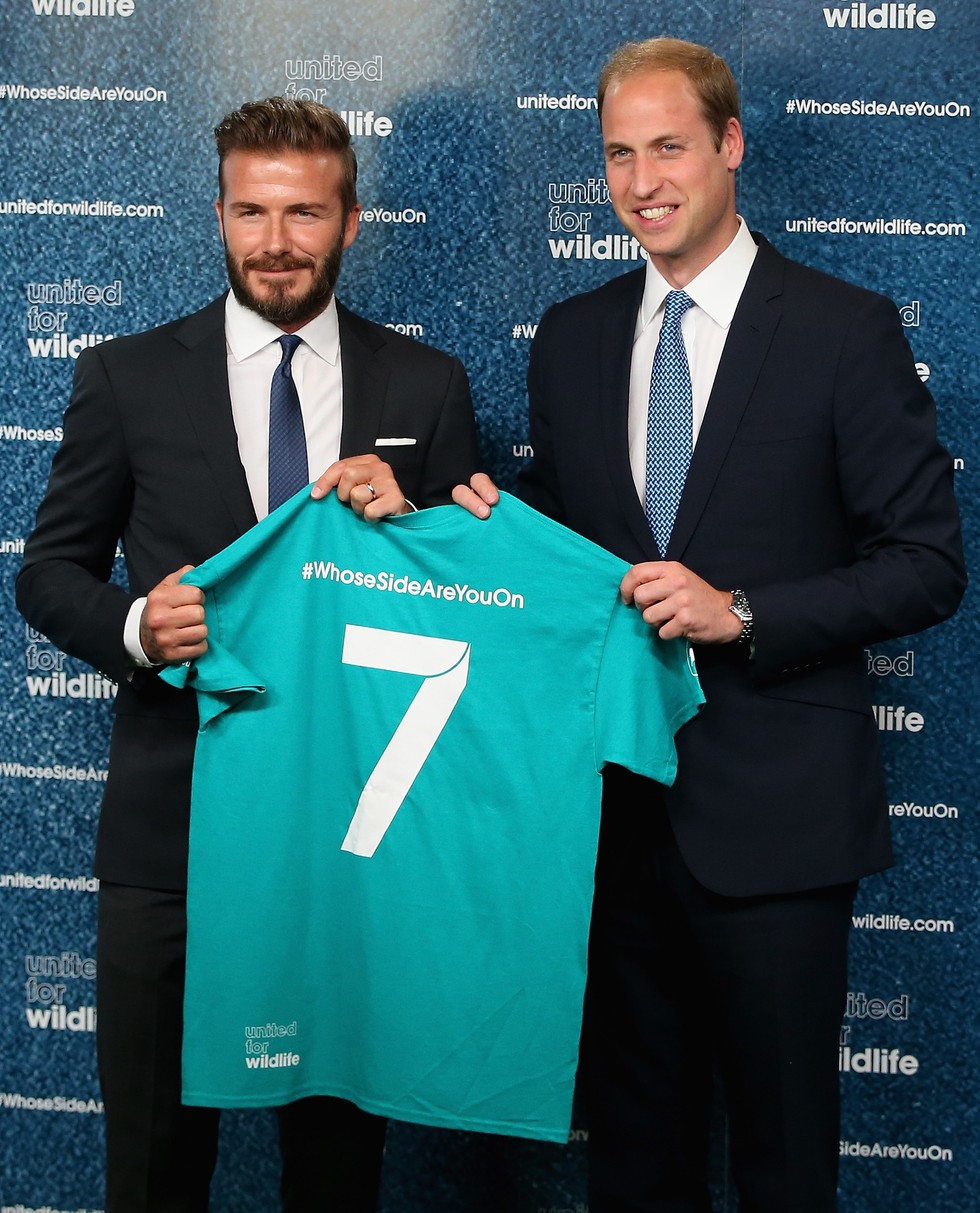
All Of These Athletes Are Starting A Twitter Crusade To End Poaching

David Beckham and Prince William have teamed up again for wildlife, and this time they’re using social media to save elephants and rhinos. At a meeting for the United for Wildlife group, a coalition of global conservation groups, the duo joined a slew of athletes (just in time for the World Cup) to unveil their sports-themed campaign.

Tennis player Andy Murray, race car driver Lewis Hamilton, cricketer Rahul Dravid, rugby world cup winner Francois Pienaar and basketball superstar Yao Ming joined the campaign. They are urging people to use the tag #WhoseSideAreYouOn to encourage people to stigmatize the buying of ivory and rhino horn, reducing the demand for wildlife products.

"We knew we needed to do more to bring the illegal wildlife trade into the open," said Prince William. "It thrives because it is hidden, often invisible, making it easy for criminals to expand their violent greed. We wanted to find a way to show the world what was happening."

Tips: Which of These 5 Mistakes Do You Make — That Successful People Don’t?

No matter what you want to succeed at in life—your career, a hobby, your personal life—there are a few universal truths that can be applied to the pursuit of success, and a few mistakes that can be considered universal barriers to achieving it.

As I’ve watched and studied successful people in my life, I’ve noticed five mistakes that they seem to be able to avoid at any cost.

Do you fall into the trap of any of these mistakes? If so, you may be putting roadblocks on your own path to success

Mistake 1. Avoid responsibility

The price of greatness is responsibility.” –Winston Churchill

One of the first things you will notice that successful people don’t have is a blaming or victim mentality. When things go wrong, what is your first response? Successful people won’t say, “I couldn’t succeed because of X, Y, and Z” or “It’s actually this person’s fault.” They’re much more likely to own a mistake rather than blame others for their failure or misfortune. I believe the key here is that by owning a mistake, we are more likely to learn from it and much less likely to repeat it.

Mistake 2. Procrastinate

"Procrastination is the bad habit of putting off until the day after tomorrow what should have been done the day before yesterday." ~Napoleon Hill 

Successful people tend to take action, regardless of whether it is the “perfect” time or not. When Gutenberg invented the printing press, the literacy rate was almost nonexistent—not exactly perfect market conditions for mass producing books. And no one knew they needed a “smart” phone until Apple invented one. Don’t wait for the perfect time to do something. Work hard and don’t give up—regardless of what might be going on around you. Success is very often the accumulation of many small achievements over a long period of time.

Mistake 3. Follow the trends

Great things are not accomplished by those who yield to trends and fads and popular opinion”. –Jack Kerouac

Every day we produce 2.5 quintillion (1018) bytes of data. In that flood of information, it’s tempting to think that we have to jump at every new development, try every new thing. (We sometimes call it “shiny object syndrome.”) But jumping at every new thing will leave no time to develop the deep understanding that pursuing lifelong learning might. Focus your energies on understanding the root of what you hope to succeed at and ignore the rest. For example, if you hope to succeed in sales or marketing you might choose to study human psychology rather than the latest social media marketing schemes.

Mistake 4. Try to go it alone

Life is not a solo act. It's a huge collaboration, and we all need to assemble around us the people who care about us and support us.” –Tim Gunn

One of the most vital things successful people do is to surround themselves with other successful people. No man is an island, and having a network, a mastermind group, surround oneself with clever people can make all the difference between success and failure. This is true whether you hope to succeed at a personal goal like weight loss (studies show people lose more weight in a group than alone) or a business goal.

Mistake 5. Lack of belief

Believe in yourself! Have faith in your abilities! Without a humble but reasonable confidence in your own powers you cannot be successful or happy.” –Norman Vincent Peale

This isn’t about positive affirmations or visualizing success, but rather, as Peale says, “a humble but reasonable confidence” that you can achieve what you set out to achieve. Think about it the other way round if you are skeptical; if you don’t believe that you can succeed, why would you even try? You must cultivate a strong belief in yourself even in the face of setbacks or adversities if you hope to ultimately be successful.


Avoiding these mistakes will help you succeed at work or a single goal or task, but to be truly successful, we also need to be happy. The sixth mistake I see unsuccessful people make is not seeking a health balance between work that fulfills, family life, friends, and health. Only when you make happiness and balance a goal can you truly succeed in any other area of your life.

How have you avoided making these mistakes? Please share your success and wisdom with us in the comments below.

Wednesday, June 4, 2014

Tips: Nine Rules For Brilliant Public Speaking


Clammy hands, cold sweats, constricted airways, dry throat, a queasy stomach – if you described the symptoms to a doctor he might diagnose the onset of a fever or worse.

The ailments have followed me through my working life and even though I’ve had to confront them on numerous occasions they still cause me discomfort.

They’re triggered by an anxiety about speaking in public, a skill for which many of us are ill-equipped and one that almost all of us are required to perform in our professional lives.

Many of those nervy feelings returned to me over the weekend as I listened to communications students at the University of Washington give 10-minute pitches on topics of their choosing.

Even though it wasn’t me doing the talking – I was there to judge and give feedback - the familiar fear took hold; it was as if the nervousness of the candidates was contagious and I had been re-infected.

Body language provides many clues to a speaker’s level of comfort and our subconscious minds are quick to distil signals of fear and uncertainty.

During the course of the day I saw many of the other factors that would determine whether the presenters took the audience with them or lost them along the way.

Confident public speaking is a gift given only to a few but it doesn’t mean you can’t be a successful public speaker, even if you’ll probably never enjoy it, so here are a few coping strategies from me and some pointers to achieve a successful outcome.

1. Confidence stems from ability. Know what you want to say and practice, practice, practice how you plan to deliver it. If you’re incorporating media in your presentation, don’t read from your screen, don’t speak in the direction of your deck and don’t read information off your deck. You are the star. The audience has come to hear you talk. Face them. Make eye-contact with them but don’t stare – that’s creepy and disconcerting.

2. Stories are powerful. Tell a story and distil your message to the one or two key points you want the audience to take away. Avoid the temptation to dazzle them with the breadth and depth of your knowledge. Information absorption decreases with overload and most of what you say will be forgotten within 24 hours. You can deal with secondary issues in a Q and A.

3. Make your speech appropriate for the audience you are addressing. If your talk is full of insider jargon people will spend more time processing the information than comprehending it. Jargon by its very nature is exclusive and your aim is to be inclusive and readily understood.

4. Stand and deliver. Great actors command a stage and you must do the same. Go to the venue ahead of time and familiarize yourself with the layout and the acoustics. Project your voice. Occupy the space, and by that I mean plant yourself firmly and stand tall. Don’t slouch, don’t fidget, don’t shift your weight from side to side, don’t look at your feet, the back of the hall or anywhere else to avoid eye contact. Don’t fold your arms, cross your legs or adopt the figleaf pose – unless you really do have to visit the bathroom.

5. Modulate your voice. Try recording passages of your presentation and playing them back to yourself. What you hear in your head and what audiences receive are wholly different. I can put whole rooms to sleep with my monotone delivery so I try to adjust the pitch of my voice to maintain interest. Overdoing it will come across as unwarranted and phoney and people will tune out. Finally, if all your phrases sound like they end with a question mark, well, just stop it, it’s annoying. OK?

6. Pause for effect. Anxiety has a tendency to make people talk faster partly as a way of conferring excitement and also as a way of getting the wretched business over and done with. The casualty here is comprehension. Slow down. You’re familiar with what you’re going to say because you’ve been over it multiple times. The audience hasn’t and they need a bit of time to absorb what you’re saying. When you make a key point or give out a killer statistic let it hang in the air for a second or two, it’ll help you gather yourself for your next segment and it’ll give the audience a brief respite.

7. Mixed messages. Ask yourself whether you want people to listen to what you’re saying or to look at a slide that makes the point for you and makes it memorable for them; when the two are mismatched attention will wander. Don’t add an image for every point you want to make and don’t pack your deck with myriad graphs, charts and miniscule type. And please don’t read what everyone can see for themselves – the audience can skim over it faster than you can spit it out and they’ll be antagonized if you do.

8. Be brave. Step out from behind the desk or podium and remove the barrier between you and the audience, it helps to foster an atmosphere of openness and confidence. Do move around and use occasional gestures to emphasize points you want to make, just don’t wave your arms around like an Italian traffic cop. And don’t pace up and down endlessly tracing and retracing your steps, you’ll come across like a caged animal.

9. Finally… Watch the clock. There’s nothing worse than a speaker who’s over-fond of the sound of their own voice. Learn to pace yourself and keep to time.

If you have other helpful tips for successful public speaking - or pet peeves to share - I’d love to hear them.

'Gruesome Playground Injuries': Theater Review


Gruesome Playground Injuries Theater Still - H 2014
John Flynn
"Gruesome Playground Injuries"


The Bottom Line

Essentially schematic and anecdotal, this time-bending two-hander achieves an affecting sense of metaphor due to sensitive playing and dialogue.

Venue

Rogue Machine Theatre, Los Angeles (runs through July 14)

Cast

Jules Willcox, Brad Fleischer

Playwright

Rajiv Joseph

Director

Larissa Kokernot

Pulitzer Prize playwriting finalist Rajiv Joseph conjures a relationship forged in pain, both psychic and physical.

Over the course of 30 years, from ages eight to 38, Kayleen (Jules Willcox) and Doug (Brad Fleischer) “meet cute” in various emergency rooms and hospitals when one or the other (and sometimes both) have been injured or otherwise grievously harmed. Doug is a risk-taking, accident-prone daredevil, Kayleen more apt to be psychically damaged, when not engaged in adolescent cutting. These perpetually wounded souls find kindred intimacy in mutual identification, often as not expressed through the push-pull of immature contrariness.

Rajiv Joseph’s excellent Bengal Tiger at the Baghdad Zoo was a 2010 Pulitzer Prize finalist that went to Broadway from its initial pair of Los Angeles premieres at the Kirk Douglas and then the Mark Taper, and his 2006 Huck and Holden won much acclaim for its local production at the Black Dahlia. Gruesome Playground Injuries, nearly more a conceit than a play, exhibits a less ambitious scope, though it sets itself a challenging technical exercise in narration, scrambling the temporal pieces to obtain a shifting, and gradually more revealing, insight into this somewhat precious and prickly empathic relationship.

Inevitably, the contrivance becomes difficult to ignore, an unavoidable byproduct of the dramatic structure, although long before then the two actors have well-engaged our immutable sympathy. Joseph’s lapidary dialogue conveys a convincing delicacy and feels true to the various ages depicted, finessing the inescapable problem of adult players incarnating children and teens. Fleischer, who originated not only this role but also another in Bengal Tiger, manifests an innate comfort with Joseph’s rhetoric and vision. And Willcox, a veteran local theater star with a multitude of local companies from A Noise Within to Antaeus to Pacific Resident Theatre, sublimates her considerable classical chops to a subdued and subtle effect only possible in the confines of a small house like that of Rogue Machine.

Along the way, Doug loses nearly as many body parts than the fabled huckster Allardyce Meriweather in Thomas Berger’s Little Big Man (the role Martin Balsam played in the Arthur Penn film). As two arrested characters who grow so very little over so long a period, Kayleen and Doug have an infuriating side that is far from redeemed by their exquisite sensitivity. Even so, the play remains genuinely touching even as it tends to fade in freshness with each new iteration rather than accumulating in power.

Despite its spiritual descent from such dated material as David and Lisa, Gruesome Playground Injuries finds a persuasive modern spin on the thwarted friendship of broken spirits, conveying a credible authenticity despite, and sometimes because of, its adroitly artificial construction.

Cast: Jules Willcox, Brad Fleischer
Director: Larissa Kokernot
Playwright: Rajiv Joseph
Set designer and technical director: David Mauer
Lighting designer: Dan Weingarten
Sound designer: Colin Wambsgans
Costume designer: Halei Parker
Producers: John Perrin Flynn and David Mauer

Lana Del Rey Will be Your Mirror: Concert Review


Lana Del Rey Performing at The Shrine - P 2014
Kyleen James


The Bottom Line

Complaining about Lana Del Rey’s voice is like kvetching that Bob Dylan sings out of tune… The play’s the thing here, not the vocal pitch.

Venue

Shrine Expo Hall
Los Angeles (Friday, May 30)

Lana Del Rey's deadpan manner is the point... As the daughter of advertising executives, she understands the use of imagery in selling product, in this case, herself.

Whoever thought booking Lana Del Rey in this cavernous hall adjacent to the Shrine Auditorium– a huge space rimmed with balconies – was a good idea had more business than artistic sense, especially the idea of cramming as many bodies as possible in this ancient venue.

Packed into the sold-out space were about 5,000 selfie-equipped fans, swooning over their poor little rich girl, a debutante in her vintage thigh-high pink baby doll dress and silver sandals, dropped onto her palm tree-strewn set with a giant rattan chair in the middle, like Fay Wray delivered into King Kong’s arms on a deserted island.

Backed by a four-piece band that periodically cut through the oversized hall, Del Rey seemed even smaller and waif-like than she does in real life, and the echoing venue did no favors to her quavering, bird-like voice, already the subject of much controversy. Still, the artist formerly known as Lizzy Grant appeared a lot more at ease center-stage than she did in her infamous deer-in-the-headlights appearance on Saturday Night Live for this brisk, 15-song, 70-minute set.

The crowd roared when she sauntered on-stage to the strains of “Cruel World,” the leadoff song on her upcoming album, the Dan Auerbach-produced Ultraviolence, backed by a video screen that registered a series of the kind of nostalgic-tinged images of an idealized, yet distant, past for which she’s become known – icons like Marilyn Monroe and a visual of Psalm 51 for “Body Electric,” her own visage engulfed in flames for the new “West Coast.”

Born in New York to parents involved in the advertising business, Del Rey is nevertheless the quintessential L.A. artist in that she understands the power of imagery – Auerbach says she approaches her music like an art project. Aloof, a blank Rosetta Stone upon which others can project their own fantasies – she’ll be your mirror – Lana drifts to the front of the crowd for some uncharacteristic human contact, and by the time she gets to the dirge-like “Born to Die,” the crowd starts singing along, making her own vocals thankfully superfluous.

“Ultraviolence,” with its twangy Chris Isaak “Wicked Game” guitar and A Clockwork Orange reference, sports the classic refrain, “Cause I’m your jazz singer/And you’re my cult leader,” as well as playfully quoting the Phil Spector-produced Goffin-King lyrics recorded by The Crystals, “He hit me and it felt like a kiss.”

Yes, folks, Lana Del Rey is nothing if not self-consciously aware of her appeal and what she’s trying to do  -- a song on the new album is called “Fucked My Way Up to the Top,” and while sensuous and alluring, that’s probably the last thing she would do – like Monica Vitti in L’Avventura, Lana’s more about alienation than copulation, more about the idea of sex than the act itself.

Still, the crowd, huddled like spectators at the Old Globe tossing oranges down on the hordes below, sing along to “Carmen” and the immolating backdrop to “Gods & Monsters,” the twinkling lights of San Fernando Valley bathed in post-apocalyptic fire.

“Young and Beautiful” is next, the melancholy runaway smash from The Great Gatsby that she reportedly sung at Kanye and Kim’s recent wedding celebration at Versailles, where she let them eat cake with all the hauteur of Marie Antoinette at her most privileged.

Still, Lana is primarily an ironist, scatting along to the keyboard accompaniment of “Million Dollar Man” like Michelle Pfeiffer in The Fabulous Baker Boys, short of spread-eagling on the piano itself.  She wanders back into the crowd for “Summertime Sadness,” but there’s a distance in her bonhomie, obvious even from my perch at the opposite end of the stage high above the fray, the chill still palpable.

“Video Games” and “National Anthem” are tongue-in-cheek attempts to commodify pop’s appeal, to turn sex, drugs and the art of commerce itself into symbols, surrounded with air-quotes. That doesn’t prevent everyone in the place from singing along and striking the appropriate poses. I predicted that Lana Del Rey would be big. But, to paraphrase Gloria Swanson’s Norma Desmond in Sunset Boulevard: It’s just everything else that has gotten small.

Set list:
Cruel World Intro
Cola
Body Electric
Blue Jeans
West Coast
Born to Die
Ultraviolence
Carmen
Gods & Monsters
Young and Beautiful
Million Dollar Man
Summertime Sadness
Ride
Video Games
National Anthem

'Jennifer Falls': TV Review

Jaime Pressly Jennifer Falls - P 2014
TV Land


The Bottom Line

A great cast trapped in comedy that's trying to break out of conventions, but can't yet. It has potential, though much to prove.

Airdate

Wednesdays at 10:30 p.m. on TV Land, beginning June 4

Cast

Jaime Pressly, Jessica Walter, Missi Pyle, Dylan Gelula, Nora Kirkpatrick, Nora Kirkpatrick

Creator

Matthew Carlson

Jaime Pressly, Jessica Walter and Missi Pyle headline TV Land's jump to single-camera comedy in a show focused on reassessing one's life after being knocked down a peg.

TV Land is doing some reverse aging with its new series Jennifer Falls, which is the network's first single-camera comedy and first foray into life without a laugh track. Its star, Jaime Pressly is also the youngest of TV Land's female comedy leads (of which there are many, including Betty White, Fran Drescher and Kirstie Alley). In Jennifer Falls, Pressly's Jennifer Doyle has just lost her high-powered corporate job because of her anger issues, and due to some very poor financial management, she and her teenage daughter Gretchen (Dylan Gelula) are forced to move back in with Jennifer's mother, Maggie (Jessica Walter).

With her tightly-cropped pixie haircut and eyes narrowed in constant suspicion, Pressly has the energy and tension of a firecracker whose fuse is lit, ready to carry the show on her tiny shoulders herself if she has to. Her co-stars do lend a hand, though: Jennifer is fired by her bumbling boss, played by Jeffrey Tambor, whose few scenes were the absolute standouts in the show's inaugural half hour (though whether or not he will return is unknown). The other great boon to the cast is Tambor's Arrested Development co-star Walter, who starts off playing against her Lucille Bluth type (though wearing a very similar later-seasons wardrobe), before the writers seem to realize Walter is better used as passive-aggressive and manipulative rather than as a baked-goods-making kind of mother.

There are many things about the pilot, in fact, that don't seem fully considered, like Jennifer's falling out (and then back in with) her childhood friend Dina (Missi Pyle), and her hatred of her sister-in-law, Stephanie (Nora Kirkpatrick), who doesn't appear to do too much to warrant such vitriol, other than wear headbands and give unsolicited financial advice. Jennifer's brother Wayne is played by Pressly's former My Name Is Earl co-star Ethan Suplee, and the two have an easy-going rapport. Strangely though, the underused Suplee's main role so far is to provide a sports bar where Jennifer starts working, and where she is required to wear a child-sized referee outfit -- going against, seemingly, the kind of sexism Jennifer was trying to fight at her job.

Creator Matthew Carlson (Malcolm in the Middle) reportedly conceived of the series as a multi-camera setup. Though that aspect fell away, Carlson has still kept his predilection for having characters narrate or talk to the camera, which isn't used to any great effect here (one of the weakest pilot moments is when Jennifer rattles off working-mother stats to the camera). The swap to a single-camera comedy is one that's on the right track for the show's tone, and yet, the beats of a traditional comedy are still ingrained, keeping Jennifer Falls from being as funny as it could be.

The show's great cast gives it a lot of potential, and they work hard in the pilot to make their thin material viable. Pilots alone are always hard to judge, and comedy pilots the most misleading of all. Great shows have come from shaky starts. Jennifer describes her situation as "from maximum profits to minimum wage."

Similarly, the show's cast also gives it incredible potential with only minimal interest right now. But a pilot being a pilot, Jennifer Falls still has a long way to go and a lot it could still prove. TV Land is on the right track for attracting audiences (possibly even younger audiences) who are looking for edgier comedy, but it remains to be seen how the show plays with its core viewership. Ultimately, for the simple sake of seeing former Bluths back on TV, hopefully Jennifer Falls gets a chance to live up to the comedy it's striving to be.

'The Fault in Our Stars': Film Review

The Bottom Line

Love conquers affliction to endearing effect.

Opens

June 6 (Fox 2000 Pictures)

Cast

Shailene Woodley, Ansel Elgort, Laura Dern, Sam Trammell, Nat Wolff, Willem Dafoe

Director

Josh Boone

Shailene Woodley and Ansel Elgort star in Josh Boone's adaptation of John Green's best-selling young adult novel. 

With interest in adapting John Green’s fourth novel running high even before its 2012 debut atop The New York Times best-seller list, Twilight producers Wyck Godfrey and Marty Bowen managed to snatch up the film rights to the hugely popular narrative, which may have been a bit of a “be careful what you wish for” moment. With the book’s millions of adoring fans eagerly anticipating the movie’s release, a distinct risk of blow-back was practically built in to the project.
Fortunately, director Josh Boone and his filmmaking team appear to have minimized the downside, in part by casting fast-rising star Shailene Woodley in the lead, along with her Divergent franchise co-star Ansel Elgort. Both are likely to be strong selling points with the film’s youth-skewing target audience, which is being further softened up by a robust marketing campaign and Green’s own substantial social media presence. With the onset of summer vacation and few similar distractions in theaters at the outset, The Fault in Our Stars should perform strongly out of the gate, with the potential to show significant staying power in the weeks following.

If any teenager can reasonably be described as “ordinary,” then 16-year-old Hazel Grace Lancaster (Woodley) is far from it. A cancer survivor since the age of 13, she’s fully in possession of both keen intelligence and sharp wit, if not her health – a challenging combination for a kid who could clearly do with a few more friends than she actually has. Instead, her most constant companions are the oxygen tank connected to the breathing tube that supports her seriously compromised lungs, along with her concerned mother, Frannie (Laura Dern), and protective father, Michael (Sam Trammell).

Hazel gets a chance to branch out when, at the urging of both her mom and her doctor, she joins an often lame though occasionally amusing church-based cancer-survivor support group, where she meets 18-year-old Augustus “Gus” Waters (Elgort), an equally precocious teen with a rather more constructive outlook than Hazel’s. Despite losing a leg to cancer, his disease is in remission and he’s dreaming of new ways to conquer the world, along with his best friend Isaac (Nat Wolff), who’s battling the affliction as well. Irreverent rather than cynical, he freely shares that he intends to “live an extraordinary life” and bonds with Hazel over her favorite book, An Imperial Affliction, written by Dutch-American author Peter Van Houten (Willem Dafoe), which just happens to be about living with cancer.

Hazel is borderline obsessed with contacting the elusive Van Houten, but he never responds to her missives. So it’s a bit shocking and even overwhelming when the writer’s assistant replies to an email from Gus soliciting information about Van Houten’s book. Then Hazel gets a message from Van Houten himself, and the author invites her to visit if she’s ever in Amsterdam. Hazel and Gus, who often insists on calling her “Hazel Grace,” quickly cook up a plan to make the trip, but it’s nixed by Hazel’s doctors and parents, concerned that the stress of the journey will strain her lungs and disrupt the experimental cancer-drug treatment she’s dependent on for her survival.

Meanwhile, Gus is falling hard for Hazel, who is fairly smitten herself, but as her condition worsens, she pulls back, telling Gus “I’m a grenade and one day I’m going to explode and obliterate everything in my wake.” Undeterred, he counters that her withdrawal doesn’t lessen his affection for her, and when he manages to find an unexpected method of funding their travel, the plan is back on again. As both teens face suddenly critical health issues, however, the outcome of both the trip and their increasingly romantic relationship becomes appreciably more uncertain.

The greatest strengths of the film clearly come from Green’s novel, which resolutely refuses to become a cliched cancer drama, creating instead two vibrant, believable young characters filled with humor and intelligence, both facing complex questions and issues unimaginable even to people twice their age. Turning the screenwriting over to adaptation experts Scott Neustadter and Michael H. Weber has preserved the distinctly literate tone of the book, even if they do occasionally deliver scenes that feel overwrought.

The script makes an excellent fit for Woodley, whose feature film career really took off with The Descendants and The Spectacular Now, two similarly smart, self-aware films. Woodley’s wise and accomplished take on Hazel Lancaster will resonate with those inclined to view the world with a somewhat skeptical point of view, although they may face similar resistance to the prospect of romance entering her life. By dint of ample charm and considerable insight, Elgort’s Gus represents more than a foil for Hazel’s self-doubt – he offers her the opportunity to mold all of her hope and frustration into a fully three-dimensional, transcendent emotional experience, whether she wants to call that “love” or not.

As Hazel’s protective but practical parents, Dern and Trammell display a realistic degree of concern without completely smothering her, and when crisis erupts, their instinctual compassion quickly restores calm. Wolff, whose character loses both eyes to cancer, provides some suitably dark humor, although it’s left to Dafoe as the acerbic author whose young daughter succumbed to the disease to deftly deliver the film’s least reassuring perspective.

Boone’s appropriately light touch emphasizes the underlying literary material, foregrounding the performances with occasional underplayed visual humor and reserving stylistic nuance for more contemplative scenes, attractively framed by cinematographer Ben Richardson. Mike Mogis and Nate Walcott’s score somewhat literally underlines the overly insistent, folky-leaning soundtrack selections from the likes of Tom Odell, Lykke Li and Ray LaMontagne.

Production company: Temple Hill Entertainment Cast: Shailene Woodley, Ansel Elgort, Laura Dern, Sam Trammell, Nat Wolff, Willem Dafoe, Lotte Verbeek, Mike Birbiglia Director: Josh Boone Screenwriters: Scott Neustadter, Michael H. Weber Producers: Wyck Godfrey, Marty Bowen Executive producers: Michele Imperato Stabile, Isaac Klausner Director of photography: Ben Richardson
Production designer: Molly Hughes
Costume designer: Mary Claire Hannan
Editor: Robb Sullivan
Music: Mike Mogis, Nate Walcott

Rated PG-13, 125 minutes

MPAA Strikes Deal With China’s Xunlei to Prevent Piracy


China Dragons Illustration - P 2014
Illustration by: Lars Leetaru
 
The Chinese video and music sharing company has agreed to implement a comprehensive system to protect MPAA members' copyrighted works from unauthorized downloading.

The Motion Picture Association of America (MPAA) has struck a deal with the popular Google-backed Chinese-language video and music file-sharing firm Xunlei to boost legitimate access to film and TV shows online.

Xunlei, which was sued in 2008 by the Hollywood studios for film piracy, and the MPAA have entered into a comprehensive Content Protection Agreement (CPA) to protect film and television content online, and to educate users on how best to access only legal versions of movies and TV shows, the MPAA said in a statement.

“The steps are aimed to counter the suspected mass infringement of MPAA member studios titles on Xunlei’s services,” the statement ran.

Under the CPA, Xunlei has agreed to implement a comprehensive system of measures to prevent unauthorized downloading of MPAA member company copyrighted works.

The measures include implementing an established content-recognition technology system that will ensure that the MPAA members' copyrighted content available through Xunlei’s services is properly licensed.

“With the largest number of Internet users in the world, the Chinese market offers tremendous potential for content creators to make their works available online to hundreds of millions of consumers,” said Steven Fabrizio, the MPAA’s senior executive vice president and global general counsel.

“This agreement is an important step forward in carrying out the MPAA’s mission in this significant market,” he said.

Going forward, Xunlei and the MPAA will cooperate to ensure the content protection measures are effective and will also implement education measures to inform users of the damage caused by illegal downloads and piracy.

News Corp's Lachlan Murdoch Defends Print Media


Lachlan Murdoch
Lachlan Murdoch
In a presentation in Australia, the News Corp co-chairman criticized competitors for "talking down print," arguing that "newspapers have a long life left in them."

SYDNEY – News Corp co-chairman Lachlan Murdoch believes there’s a long life left in newspapers, with print media to remain “a core part of our business for years to come.”

Murdoch was making his first public remarks since returning to work at News Corp earlier this year after an eight year absence.

At an industry conference in Sydney he criticized News’ competitors for “talking print media down" as the industry grapples with competition from online, fragmenting audiences and its transition to digital media.

“There is a challenge [in print], absolutely. We are embracing digital, absolutely; but newspapers have a long life left in them,” he told the audience.

“We [have been] supporting the industry and talking up the industry, which it deserves, but some of our competitors were talking it down, actively talking it down in their own products, and that’s just crazy,” he added.

“That’s a lack of leadership, which is frankly irresponsible and it’s got to stop. We have not done a good enough job in recent years of explaining the strength of our business and that’s what we have to do better,” Murdoch said.

It’s a refrain that’s been heard several times from News Corp executives in recent weeks. In early May, News Corp global CEO Robert Thomsen told advertisers and media buyers at an “upfront” style event in Sydney that he has little time for the thought that "print is dead."

“It’s a sign of a morbid mindset that afflicts not just this country but, internationally, some media groups,” Thomsen said then.

“If you speak for print, does that mean you don’t get digital? That’s clearly not the case if you look at what we’re doing here in Australia and globally. It’s because we get digital that we fully appreciate the power of print. You need to have the platform permutations that suit the reader and advertisers.”

Murdoch said the future of print, and News Corp, lay in not settling for the status quo.

“I think we are in the greatest industry in the world going through the greatest change we’ve ever experienced. The opportunities are endless,” he said.

“The best way you can thrive within that world is to be disruptive. Find opportunities and don’t settle for the status quo. Take risks and be disruptive,” he added.

But while News Corp remains confident about the strength of its legacy print businesses, Murdoch said that News Corp and 21st Century Fox, of which he is also co-chairman, would continue to “shake up the establishment.”

“That’s what we will continue to do ... It’s part of our cultural DNA that we’ve got to protect that and keep moving forward.”

“The ‘new’ News is going to be here for a long time,” he said. “We see ourselves very much as a young business. News and Fox as well have always been challenger businesses.

'Downton Abbey' Helped ITV Turnaround, CEO Says


Adam Crozier – P 2013
Getty Images
ITV CEO Adam Crozier

Adam Crozier also discusses new drama and women channels, ITV's acquisitions of production firms in the U.S. and the upcoming soccer World Cup.

LONDON – The turnaround of U.K. TV networks giant ITV in recent years was helped by hit drama Downton Abbey, among other things, CEO Adam Crozier said here on Wednesday.

Appearing at the Media Summit, part of the Creative Week series of events organized here by publisher MBI, he said that when he joined ITV in 2010, things were "tough." But his team's decision to focus on quality content has driven up ratings and financials. He said his team also decided that it was best to "own as much of our content as possible so that if it travels around world, we get the benefit."

ITV doesn't own Downton Abbey, a show from NBCUniversal International Television Production's Carnival Films unit.

Still, Crozier said that the show's success was important in terms of ratings and staff morale. "The lift that gives anyone at the organization is massive," he said. "That sort of started the ball rolling."

He described his first year an a half running ITV as challenging, saying it often felt like his team made "two steps forward, three steps back." Every time something went well, management uncovered some other "disaster," he said.

While ITV has continued to cut cost, he said the bigger focus has been on streamlining processes and optimizing operations rather then firing staff. ITV actually has a bigger staff now, and about half its workforce didn't work at the company in 2010, Crozier said.

He touted a slew of acquisitions of production firms, especially in the U.S., as a way to grow content revenue, which has made ITV less reliant on advertising revenue. And the deals have propelled ITV into a prominent position in the U.S. "We went from nowhere to being the biggest indie" in the U.S., he said. After its TV production firms had 12 shows on the air in the U.S. a few years ago, they now have 150, Crozier said.

The ITV CEO on Wednesday also was bullish on other new revenue opportunities, including from new channels. He cited recently announced ITVBe, which targets young female viewers with lifestyle and reality programming, and ITV Encore, a drama network that will launch on pay TV giant BSkyB next week, as key opportunities.

ITVBe will also make room on ITV 2 and allow it to focus more on young adults and comedy fans, he said.
Crozier also said that ITV is looking at offering some dramas for ITV Encore with a separate budget. That would allow it to make dramas with expected smaller audiences, he said, highlighting that the flagship ITV channel sees an audience of 5 million people as a slightly disappointment. But he said that such hit drama as Game of Thrones drew about 1 million-1.5 million viewers in the U.K.

ITV Encore will launch with episodes of Downton Abbey, Broadchurch and one-off dramas such as Mrs Biggs with Sheridan Smith and Lucan with Rory Kinnear.

ITV recently said that it had a somewhat weak start to the year, with Crozier on Wednesday explaining that audiences have to some degree moved from commercial broadcasters to U.K. public broadcaster BBC. But ITV's ratings have started improving and will improve further with the upcoming soccer World Cup, he said.

He also said that ITV's status as a British public service broadcaster (PSB) continues to be a good thing for the company. "Being a PSB is a very good thing," Crozier said. "We absolutely believe in news" and other programming with public service values.

Internet Ads Poised to Top Television Within Seven Years: Study


Issue 21 BIZ Web Ads Chart - H 2014
PricewaterhouseCoopers' annual Outlook reveals a reversal of fortune by 2020 and which markets are poised to boom.

Television's decades-long dominance of advertising is poised to give way to the Internet within seven years, according to PricewaterhouseCoopers' new Entertainment and Media Outlook report that predicts revenue through 2018.

PwC's 15th annual report, released June 4, reveals that TV advertising will generate $173.7 billion worldwide in 2014 and grow to $214.7 billion in 2018. During the same period, Internet advertising will grow from $133 billion to $194.5 billion. PwC does not prognosticate beyond five years, but its research indicates a 5.5 percent compound annual growth rate for TV advertising compared with 10.7 percent for the Internet, suggesting the latter will pass the former as early as 2020 -- marking a sea change that will come about fairly quickly. As recently as 2010, revenue from TV advertising was more than twice that from Web ads.

For the entire "E&M" industry -- including film, TV, music, Internet, video games, advertising, print and outdoor -- PwC predicts worldwide revenue of $1.87 trillion in 2014, growing to $2.27 trillion in 2018.
PwC's annual five-year forecast has been rather accurate -- though a year ago it predicted E&M would grow 5.6 percent worldwide in 2013, exceeding actual growth of 4.9 percent. In the U.S., the prediction was for 4.6 percent growth, but actual growth was 4.3 percent. Stefanie Kane, a partner at PwC, says the overestimations owed largely to greater-than-expected weakness in newspapers, magazines and billboards.

The U.S. will remain the world's primary E&M market for the foreseeable future, according to the report, but China will overtake Japan for the No. 2 spot in 2018. PwC says the "higher-growth, larger-scale" markets are understood to be Brazil, Russia, India, China and Mexico. E&M companies also would be wise to look for growth in South Africa, Turkey, Argentina and Indonesia: Those "markets of the future" will account for 3.3 percent of worldwide E&M revenue in 2014, up from 2.7 percent in 2013.

On the film front, look for a milestone in 2017 when the industry generates more than $100 billion in revenue worldwide for the first time, with the fastest growth coming from VOD. A year ago, though, PwC was estimating the $100 billion milestone would occur in 2016.

Mature markets are still commanding much more for a trip to the cinema than are developing markets, notes Matt Lieberman, the director of PwC's entertainment and communications practice. Admission prices in the U.S. will grow 2 percent annually to $9.81 in 2018 while globally they will advance 2.2 percent to $5.15. Today, a family of four pays about $36 for a night at the movie theater, while in India it can cost as little as $2. In Nigeria, it's $12 and in Thailand it's $19. Europe has been a problem of late, according to PwC, in particular Spain, where piracy, a weak economy and a sales tax on movie tickets have caused box-office revenue to contract between 2010-13.

In the U.S. film industry, revenue from over-the-top streaming will surpass physical home video in 2017 ($10.9 billion compared with $9.3 billion for both rental and sell-through discs), and OTT will top the box office a year later ($14 billion compared to $12.5 billion).

As for TV, subscriptions and license fees will attract more revenue than advertising, though growth there will be slower (3.2 percent annually through 2018 compared with 5.5 percent), and Kane said that 6.2 percent annual growth for video games makes that industry "a bright star" for the next five years.